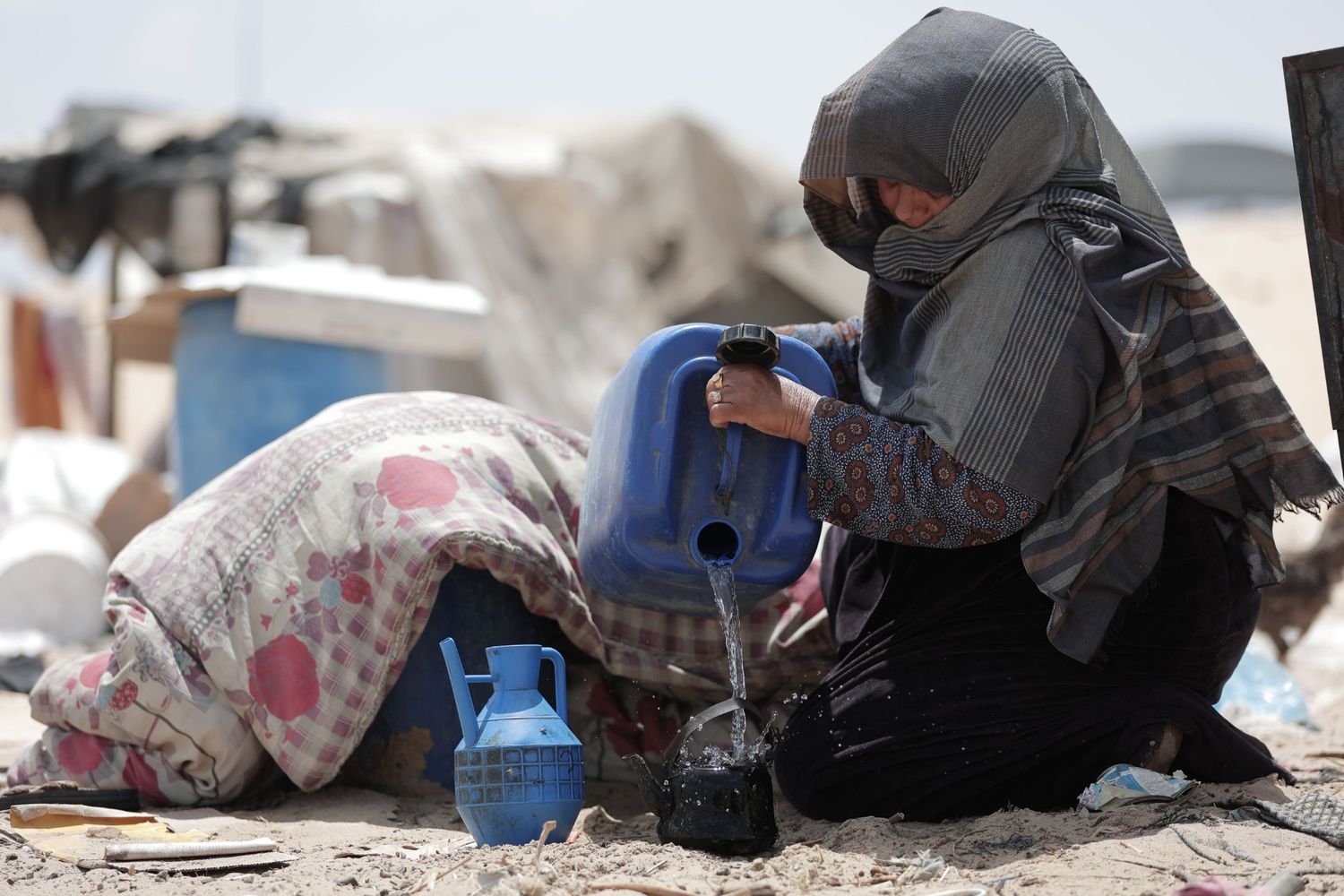
When the cameras leave, life does not become easier.
The news cycles on, new headlines rise and fall, social media buzzes with activity, the crisis fades away for everyone else.
Meanwhile, for those who have been living through it, tomorrow is just as challenging as yesterday.
Parents wake before their children, struggling to find enough food to eat; parents stand in lines for days in an effort to get clean water; parents pray that medical supplies will be there when their child needs them.
Children wake, expecting comfort from the people and faces around them, only to find themselves asking when they can go home, when this will end, what they can do to make it all better, playing with whatever they can find to bring themselves some measure of joy, laughing when they can, smiling when they must.
The problems do not disappear simply because the cameras have left.
They become quieter, perhaps, tucked behind the noise of daily life for those who can make it so.
There will be no news alerts about the father who walks miles every day in search of clean drinking water.
There will be no television crews waiting to catch the mother's eye as she skips another meal so her children will not go hungry.
There will be no breaking news stories about the elderly neighbor who shares whatever meager food she has with another family, because for this family, this is daily life, and daily life is not made up of news headlines.
Humanitarian crises tend to be defined by their most newsworthy moments: a destroyed building, a standing shelter, a convoy of aid supplies arriving safely.
And rightfully so, because those are the images that define a crisis for everyone who sees them, those that make the rest of the world acutely aware of a problem that needs to be solved.
They are not, however, the whole picture.
The weeks, months, years that follow are just as important.
Families continue, their lives ebbing back towards some semblance of normalcy, if not entirely sure what that normalcy looks like anymore.
Parents try to soothe frightened children, while trying to find ways to make ends meet, to feed their children, to take care of their own needs.
Children try to move forward in whatever schooling they can manage, while asking how they can help.
Neighbors begin to band together, to come alongside one another and rebuild, to share what little they may have, to assure each other that they are not completely alone.
Rebuilding, recovery, restoration, healing, these things do not happen overnight.
They happen one day at a time.
One family, fed by a meal shared in good faith.
One community, warmed by a blanket given out of abundance.
One person, saved by supplies that arrived when they were needed most.
One town, kept safe by a water supply purified for their good.
Small things, those kinds of things, that is what rebuilding is made of.
Therefore, that is what humanitarian efforts should be made of.
This is why people and organizations should continue to give, to serve, to be there, even when it seems like nobody is watching.
Because even when it seems like nobody is watching, the families and communities affected by a disaster still need people to care.
Even when it seems like nobody is watching, small acts of generosity will remind hurting people that they are not forgotten.
While single-minded efforts may not be able to completely undo a disaster, they can certainly be the difference between day and night for families adjusting to a new reality.
A warm meal will be more than just food for a family that has not eaten in two days: it will be sweet relief.
Clean water will be a blessing for a child who has never known anything but scarcity.
A hygiene kit will bring dignity.
Medical supplies will bring life.
When the cameras leave, the humanitarian efforts should continue, because aid organizations, volunteers, and communities of faith will still be there, and so will the families and communities affected by a disaster.
Their stories will not end simply because headlines change.
Neither will your compassion.
That is how you truly make a difference in the face of a disaster, not by chasing headlines, but by showing up and staying until the job is done.
After all, when the cameras have left, it is often the perseverance of those who remain that will continue to inspire those who watch.
And perhaps even more importantly, when nobody is watching at all, it is often that same perseverance that will provide hope for those who need it most.
And that, above all, is why nobody should ever forget.