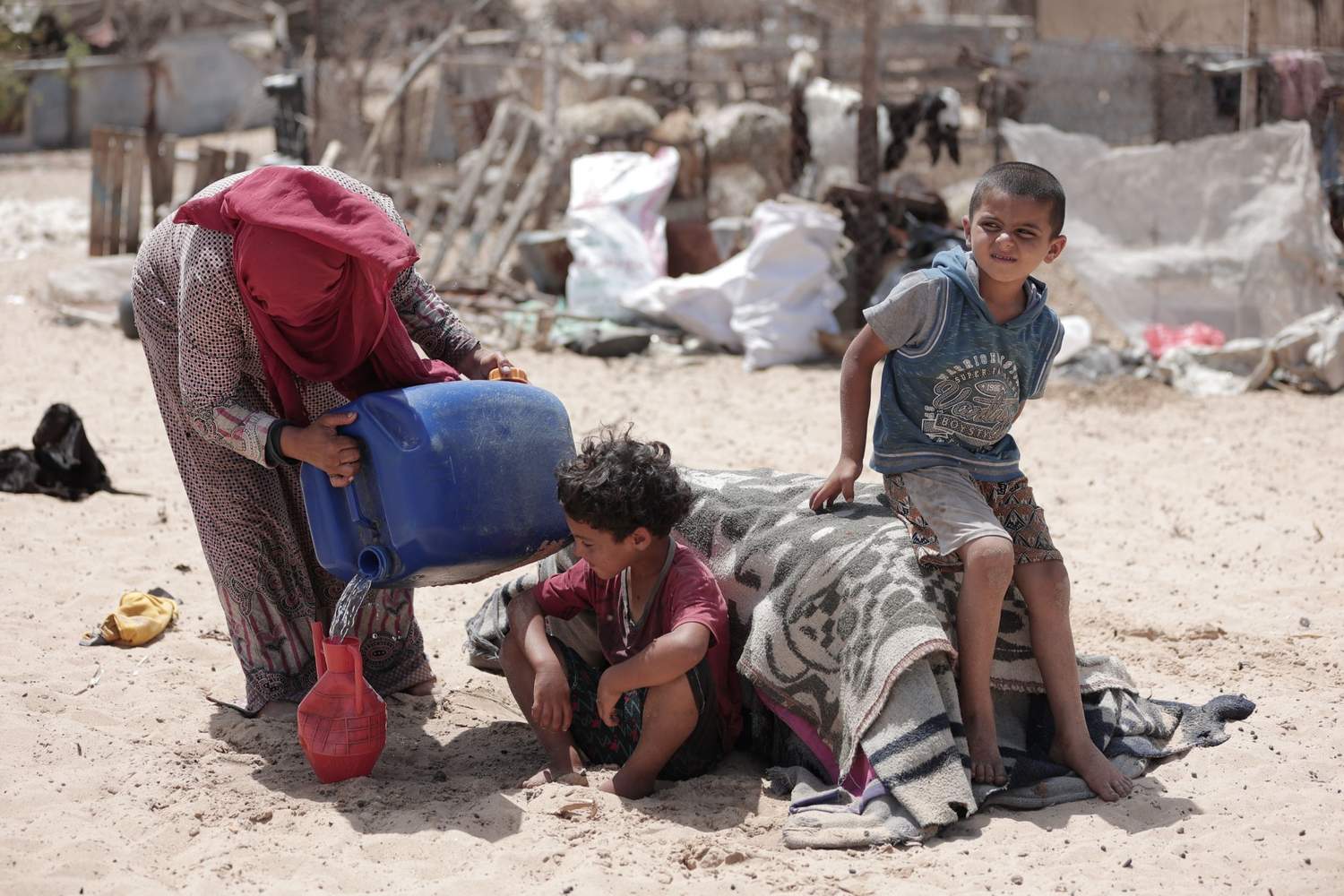
When people think about humanitarian crises, they often picture the moment everything changes.
The explosion. The flood. The evacuation.
What they don't often see is what comes after.
The days begin to look similar. Wake up. Search for water. Check whether there is enough food for everyone. Wait for news. Hope someone you love is safe. Repeat it all again tomorrow.
For families living through conflict, survival isn't made up of dramatic moments. More often, it's built from hundreds of quiet decisions that no one outside their community will ever notice.
A mother stretches one meal so her children don't go to bed hungry.
A father walks farther than usual because he heard a clinic might still have medicine.
Children invent games with whatever they can find, not because life is easy, but because childhood has a way of insisting on itself.
These aren't remarkable stories to the people living them.
They're simply another Tuesday.
That quiet resilience is easy to overlook. Headlines naturally focus on what is urgent and immediate. Yet behind every statistic is someone trying to hold on to routines that once felt ordinary. Brewing tea. Washing clothes. Helping a child with a lesson. Calling a relative just to hear their voice.
These moments matter.
They remind people that dignity isn't something reserved for better days. It belongs in difficult ones too.
This is where humanitarian support makes a real difference. A food parcel is more than food. Clean water is more than a basic necessity. Medical care is more than treatment. Each one gives families a little more room to breathe and one less burden to carry.
It doesn't erase hardship.
But it can mean that parents spend less time worrying about their next meal and more time caring for their children. It can mean a student returns to learning instead of falling further behind. It can mean an elderly neighbour receives medicine before a small problem becomes a serious one.
Progress in these circumstances rarely arrives all at once. It comes in small steps, repeated every day by people who continue showing up for one another despite everything around them.
Communities have always been at the heart of recovery. Local volunteers, teachers, healthcare workers, and neighbours are often the first to respond and the last to leave. Their work reminds us that compassion is most powerful when it becomes action.
At Yafa Relief, every initiative is rooted in that belief. Whether providing emergency assistance, healthcare, clean water, education, or essential supplies, the goal remains the same: to stand alongside families as they rebuild their lives with dignity, one day at a time.
Because hope isn't always loud.
Sometimes it looks like an ordinary day that became just a little easier than yesterday.