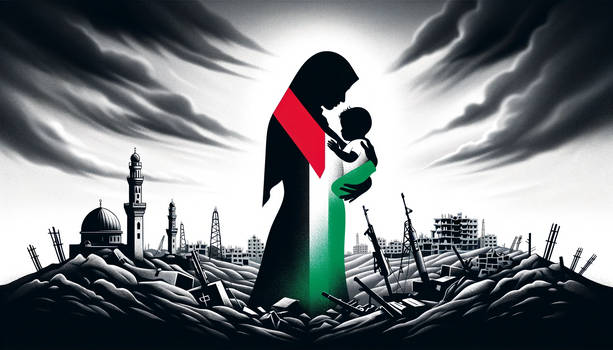
A child stops speaking. Not because anything happened to her throat. Her tongue is fine. Her lungs are fine. The doctors find nothing wrong when they look for it. What they find is silence where a voice used to be, and behind the silence, everything she watched happen.
This is one way the catastrophe announces itself now.
What the Numbers Know
Since January 2026, UNRWA has logged more than 125,000 skin infection cases across Gaza. That is roughly 400 new cases every single day. And those numbers do not include chickenpox or scabies, both of which have tripled in recent months. The real count is higher. It is always higher.
Overcrowded tents. Temperatures climbing. Water systems gone. Sanitation gone. The diseases filling the gap are not exotic or mysterious. They are old, preventable, ordinary diseases that spread when there is nowhere clean to wash your hands or your children.
They spread because the conditions allow it.
What Comes in the Night
Rats move through Gaza's displacement camps after dark. They bite children's fingers and toes while they sleep. They chew through blankets, through the few things families carried out. Reuters documented this in April. The BBC reported weasels in the camps. Newborns have been bitten.
OCHA found rodents or pests visible in 80 percent of displacement sites. Skin disease was reported in half of them.
This is not a metaphor. These are children. These are their bodies.
The Inside
The physical crisis runs alongside something harder to photograph. UNFPA official Sima Alami described it as a profound mental health emergency, and the numbers behind that phrase are worth sitting with.
96 percent of children in Gaza report feeling that death is imminent.
One in five adults thinks about suicide almost every day.
More than a million children need mental health support.
A million.
The Children Who Stop Speaking
Clinicians are seeing a sharp rise in selective mutism among children who had no previous diagnosis. Previously healthy children, children who spoke normally, who laughed, who argued with their siblings at dinner, losing language after witnessing extreme violence. Al Jazeera has reported on it. Doctors in Gaza have named it.
One child stops talking after watching a parent pulled from rubble. Another after a strike kills the sibling beside them. There is no physical damage. No wound in the throat. Only something that happened that the body decided it could not find words for.
The silence is not a symptom to be treated and moved on from. It is a record. It is what the body does when language runs out.
What This Crisis Looks Like, From the Outside
It does not look like much. No explosion. No photograph that travels. The media cycle has largely moved on, hunting for the next visible thing. What is left behind is scabies, rat bites, and children who have stopped talking. A slow, grinding catastrophe that does not produce footage.
That is partly why it continues.
The world responds to what it sees. Gaza's current crisis is, by design or neglect, made to be unseen. The tent camp at night is dark. The rash on a child's arm does not trend. The silence of a child who used to speak does not break through the noise.
This newsletter exists because someone has to keep saying it.
What Remains Possible
Mobile health clinics are reaching displacement sites and treating skin infections, providing basic hygiene kits to families who have nothing. Mental health programs for children, including play therapy and family counseling, are operating where funding allows. These are not solutions. They are what is possible right now, given the conditions.
They keep people alive while the conditions exist.
They need funding to continue.
Support This Work
Yafa Relief funds the kind of work that does not make the news cycle. The quiet work. The clinic that shows up to a tent camp. The counselor who sits with a child who has stopped speaking.
If you can give, give now. If you cannot, share this. The crisis does not end when the coverage does.
Every contribution goes directly toward humanitarian programs serving people in Gaza. No overhead theater. No donor performance. Just the work.
Yafa Relief is a Palestinian humanitarian nonprofit. To read past newsletters or learn more about our programs, visit yafarelief.org.